






1. Planning & Customs Clearance
- Determining the transport route
- Customs formalities
2. Collection & Packing Service
- Well-trained specialists
- Secure packaging
3. Transport to the port
- Transport to the port of destination
- Modern fleet of lorries
4. Shipping
- Cost-effective as a shared load
- Consolidated cargo in sea containers
5. Collection in Canada
- Reliable partners
- Certified quality
6. Delivery to your home
- Door-to-door service
- Completely hassle-free
7. Full Service option
- Furniture assembly
- Electrical and plumbing installation

TÜV certified
quality

Individual
Consulting

Professional
planning

Global
partner network

High quality
equipment

Effective
insurance



On-site inspection
Would you like us to arrange a viewing at your premises? Please get in touch to arrange an appointment. Free of charge, of course.
Book an appointment
Quick enquiry
Get in touch! Fill in our removal inventory form. We’ll draw up a personalised quote for you as soon as possible.
Get started now
Virtual tour
Arrange a viewing of your flat yourself on your smartphone – any time, day or night. We’ll draw up a personalised offer for you.
Get started nowDo you dream of a fresh start in one of Canada’s modern cities or its vast countryside? Deutsche Möbelspedition would be delighted to ensure your move to this ice-hockey-mad country goes smoothly. Canada is one of the world’s leading destinations for immigration. Every year, it attracts numerous immigrants from all over the world, including many Germans. DMS has reliably supported many of them in their move to North America and the start of their ‘new life’. As experts in relocations to Canada, we offer emigrants the benefit of our many years’ experience and extensive expertise. After all, when taking such a major step in life as emigrating overseas, having an experienced partner by your side right from the start is invaluable.
DMS is here to support you every step of the way. Our removal experts will be with you from the very first stages of preparation in your old home right through to the handover of the keys to your new home in Canada.
To make this big step a little easier for you, we’ve summarised everything you need to know, along with useful tips and important information for your move to Canada. After all, emigrating requires a great deal of preparation, and planning needs to start well in advance. DMS provides you with reliable support – so that your Canadian dream can become a reality.
-
Visa – Your ticket to a life in Canada
Are you thinking of relocating to Canada? It is possible, but immigration to this North American country is subject to certain conditions. There are various ways to obtain permanent resident status in Canada. If you’d like to visit the country first and perhaps lay the groundwork for emigration whilst you’re there, your chances are good. There are agreements in place with a number of countries, including Germany, which allow entry even without a visa. All you need is the electronic travel authorisation, known as an eTA, which is relatively quick and easy to obtain. However, you should plan your move to Canada well in advance. It is important to familiarise yourself thoroughly with the various visa types and their requirements. Here, we provide an initial overview of the options available and the necessary first steps.
eTA
The eTA (Electronic Travel Authorisation) allows citizens of numerous countries to enter Canada without a visa. This is a real advantage, as the eTA is cheaper, quicker and involves significantly less red tape to obtain than a visa. It allows you to visit Canada for up to half a year, whether for study, tourism or business. An eTA is also sufficient for transiting through a Canadian airport or visiting friends in the country. However, it does not grant a work permit. There are certain requirements for obtaining an eTA. For instance, you must not pose a health risk to Canada and must not have a criminal record. Ideally, you should only book your flight to Canada once you have received your eTA. That way, you will be certain of your entry permit before committing to any non-refundable expenditure.
Visas and Permanent Residency
A range of different Canadian visas are available for entry into and temporary stays in Canada. A visa is generally required if you wish to stay in Canada for longer than 6 months. There are specific visas for working, studying or travelling in Canada, for example. There are also visas for young people who wish to combine a holiday with part-time work, and even for grandparents wishing to visit their grandchildren living in Canada. Applications for a Canadian visa are therefore made on a case-by-case basis.
Anyone wishing to emigrate to Canada and live there permanently must apply for permanent residency status. There are many ways to do this, as Canada offers over 80 immigration programmes. These enable permanent residency through family ties, professional qualifications or a planned business venture. The easiest route to immigration is through a partnership with a Canadian citizen. Furthermore, those seeking family reunification have good prospects of settling in Canada.
Those in a profession that is in demand in Canada generally have a strong case. In this instance, you can apply through one of the relevant programmes (Professional & Skilled Worker) run by the Canadian government or individual provinces. Anyone who has already worked in Canada on a temporary ‘Work Permit’ – and perhaps even has a job offer in Canada – has good prospects. This is because work experience gained whilst already in the country is viewed favourably. As an entrepreneur, you may also have good prospects. Entrepreneurs are welcome in Canada, provided they meet certain conditions.
Canadian immigration programmes operate on a points-based system. Points are awarded, with varying weightings, for professional qualifications, language skills, the applicant’s age and their financial resources.
A selection process determines the score an applicant achieves. These scores determine whether they are granted a permanent residence permit for Canada. The final decision always rests with the Canadian immigration authorities.Canadian citizenship
Would you like not only to emigrate to Canada, but also to become a full Canadian citizen? A prerequisite for this is, in any case, permanent resident status, which must have been obtained. In addition, an applicant must have lived in Canada for at least three years or have filed three tax returns. They must also possess sufficient language proficiency, as determined by a language test, and pass the Canadian citizenship test. Furthermore, the applicant must not have committed any serious criminal offences. Of course, having Canadian relatives or having been born in Canada can simplify the process.
-
What you should take with you when you move house – and what you’d be better off leaving behind

One thing applies to every overseas move: in the end, all your belongings must fit into the container. This is because the sea container is the most common means of transport for international relocations, such as moving to North America.
Naturally, you become attached to the things that surrounded you in your ‘old life’, especially when your new home is far away. However, it makes sense to weigh up very carefully which of your belongings are worth taking with you on the move to Canada. Household goods that have been stored in the cellar for some time, or are still languishing in removal boxes from your last move, might be better off not making the journey. For one thing, even the largest shipping container will eventually reach its capacity. For another, unused household goods will take up valuable space in your new Canadian home.
If you are not yet 100 per cent sure about your move abroad, or if you would like to have your belongings forwarded at a later date, we’d be happy to store them for you in the meantime. DMS’s professional storage services offer secure and appropriate storage solutions, tailored to your needs. We handle the short- or long-term storage of furniture, furnishings and personal effects, in accordance with your individual requirements and whilst fully preserving the current market value of your belongings.
Are
you unsure about the correct protective packaging for transporting your belongings by sea container? Our removal experts are thoroughly familiar with the packing requirements for sea containers. As long-standing specialists in removals to Canada, the USA and Australia, we know exactly what matters when it comes to protection during overseas transport. We’d be happy to take care of packing your household goods properly, if you wish. Do you need advice and support with the logistics of your move abroad? DMS is the reliable partner at your side. Below are a few examples of cargo for your Canada relocation planning.Vehicles
If you’d like to take your vehicle to Canada, there are various options. The quickest, but also the most expensive, option is air freight. If you opt for sea transport, you can ship your vehicle to Canada either in a container or on a roll-on/roll-off ferry. Several Canadian ports are suitable for loading your vehicle. However, the administrative burden and costs are not insignificant. A number of customs formalities must be completed and fees paid. You should leave the handling of customs formalities for importing a car into Canada to a specialist. This will save you time and hassle.
Furniture and kitchenware
Whether or not you choose to emigrate to Canada with your furniture depends ultimately on your emotional attachment to the items. Pieces of furniture represent particularly fond memories, but they are also bulky items to move. Of course, you can also purchase furniture, home furnishings and kitchens from specialist retailers in Canada. In all major cities, you’ll also find them in the furniture stores of a well-known Swedish furniture retailer. Whether it’s financially worthwhile to take your furniture with you cannot be said in general terms. On the one hand, there are the costs of buying new furniture in Canada. On the other hand, there are the individual costs for the shipping container, packing materials, port charges and transport. Kitchen furniture, in particular, takes up space in the container and must ultimately also fit into your new Canadian home.
See your move to Canada as the perfect opportunity to part with old clutter. Ask yourself what value and use the individual items in your removal load would have for you in Canada. Don’t lose sight of the costs and volume of the shipping container in the process.
Electrical appliances and computers
You cannot simply use your electrical appliances in Canada. This is not only because the North American mains plugs in Canada – as in the USA – are designed differently. That could be solved with the appropriate adaptors. The real problem, however, is the mains voltage, which differs from that in Germany. Some of your electrical appliances may, however, be suitable for the voltage in Canada. In this case, a sticker on the appliances will indicate the permissible voltage range of 110–240 V and frequency range of 50–60 Hz. Some appliances can also be switched to the required voltage. If neither of these applies, you will need a voltage converter to regulate the voltage.
Pets
Are you emigrating to Canada? Then, of course, your four-legged family member will be coming along too. In principle, emigrating to Canada with pets is straightforward, but it does require a certain amount of preparation. It is important to have an EU pet passport, which must show that the animal has had a valid rabies vaccination and has been identified by tattoo and/or microchip. Remember to provide a translated version of the document in English or French. Your pet will be thoroughly inspected by Canadian customs and checked for signs of illness.
Bear
in mind that airlines have their own rules and regulations regarding the carriage of animals. -
Import regulations
Every country has its own specific import regulations, compliance with which is monitored by customs. Failure to comply with the country’s customs regulations can not only seriously jeopardise the start of your move abroad, but also lead to enormous trouble. Canadian customs are extremely strict when it comes to enforcing import regulations. It is therefore essential to take note of the exact duty-free allowances for different goods, items that are completely prohibited, and the obligation to declare cargo.
Consumer goods
The import of tobacco products into Canada is limited to 200 cigarettes, 200 grams of tobacco or 50 cigars per person. Alcoholic drinks are limited to a maximum of 1.5 litres of wine, 1.14 litres of spirits and up to 8.5 litres of beer per person. However, these limits apply only to persons aged 18 or over upon arrival in the Canadian provinces of Alberta, Manitoba and Quebec. In all other provinces, only persons aged 19 or over may import the quantities specified. Gifts
are duty-free up to a value of 60 Canadian dollars (CAD). You may carry several gifts, each of which may reach but must not exceed this maximum value. You do not need to declare cash sums up to 10,000 CAD or the equivalent value in another currency.
Food
You should generally exercise caution with foodstuffs, particularly raw products. These include meat, eggs, dairy products, honey, and fruit and vegetables. The Canadian authorities wish to prevent invasive species, animal diseases and plant pests from entering the country. All plant- and animal-based foodstuffs, fruit and vegetables, wine, herbs, houseplants, seeds and firewood must be declared. It is quite possible that certain food items in your luggage could result in your journey to Canada being halted at customs. The regulations when crossing the border from the USA are often far less restrictive. However, this does not apply if you are in transit and coming from outside North America.
Medicines
Medicines should only be brought into Canada with the relevant doctor’s prescription, accompanied by a French or English translation. A European Emergency Health Card contains the doctor’s contact details and a record of medical conditions and prescribed medicines. Obtaining this ENA can be a very sensible decision before emigrating to Canada.
Weapons may only be imported by persons over the age of 18 and for a specific, documented purpose such as hunting or protection against wild animals. The relevant forms must have been completed in advance; otherwise, firearms may not be brought into Canada.
The import of animals must
also be declared in advance and, depending on the species, is only permitted with the appropriate authorisation. Furthermore, proof of vaccination must be provided. See also: What you should take with you and what you should leave behind > Pets -
The packing list for your move to Canada

Are you planning to emigrate to Canada with all your household goods in a shipping container? If so, there’s a simple rule: the more organised and detailed your cargo documentation is, the smoother the customs clearance process will be. The packing list, which must be submitted to Canadian customs in English or French, should therefore be drawn up with great care. Canadian customs officers will certainly check your shipping container thoroughly and may even carry out a scan. You should therefore document all individual items grouped by category and list the contents in a consolidated manner on your packing list. This provides a clear and easily traceable overview of all the goods being transported in the container.
Ultimately,
this clear overview will also make your move to Canada and settling into your new home considerably easier. After all, you will need to unpack the overseas container in Canada.
If you would prefer to have your removal goods professionally packed by experienced removal specialists, DMS will be happy to take care of this for you. The benefit for you is that our experienced removal staff will automatically draw up a customs-compliant packing list. We will provide you with a copy for your removal records.
If you
pack your belongings yourself for your move to Canada, both Canadian customs and your removal company will require a customs-compliant packing list for the clearance of the removal container. We recommend having all customs documents prepared by a specialist. When it comes to customs formalities, the correct declaration often hinges on the finer details. If Canadian customs detect any discrepancies, your container will be held at customs. Your shipping company will charge a daily rate for any subsequent storage. In the worst-case scenario, the container will be returned. As the removal container usually contains all your household effects, a smooth process is of the utmost importance. Deutsche Möbelspedition offers you professional customs clearance as a key part of its service package. With our many years’ experience in removals to Canada, we support you by handling your freight professionally, in accordance with Canadian customs law. -
Choosing a container, scheduling and removal services
Moving to Canada, as a classic overseas move, is a clear case for a shipping container. Whilst you travel by plane, your household goods will be transported safely to North America in a sealed container. You can choose the shipping container to suit your individual needs. For a family move, for example, a 40-foot container is usually used. Measuring 12 metres in length and with a capacity of 67 m³, it generally accommodates the contents of a 3–4-room flat plus any items stored in the cellar. Containers are also available in 20-foot (33m³) and 40-foot high-cube (78m³) sizes. If you cannot find what you are looking for in this selection, you can also opt for one of several containers with custom sizes.
You should consider your choice of container carefully and, if necessary, consult a DMS specialist. This is because the cost differences between the removal containers are not insignificant. If there is unused space in the steel container, you can take more goods with you or offer the space for additional cargo. If, on the other hand, there is not enough space in the removal container, this is frustrating and can prove costly. Bear in mind that bulky solid wood furniture takes up a lot of space and is heavy. Whilst furniture from the well-known Swedish furniture chain can be dismantled to save space, it is also available new in North America.
Are you
planning to emigrate with a manageable amount of household goods anyway? Then shipping your belongings as a consolidated load in another container with spare capacity could be an option. Your belongings will be transported just as safely and reliably to Canada in a sealed shipping container, at a lower cost.
Would you like some advice on calculating the volume of your removal goods and choosing a container? Our removal experts will be happy to assist you, working with you to calculate the removal volume and the required container.
Timing and Removal Planning
The journey time for a sea container shipped to Canada is influenced by various factors. These include the choice of port of departure and destination, the shipping line, Canadian customs, and even the time of year you are emigrating. It is therefore essential that the shipment is planned well in advance and arranged in good time. The journey to Canada’s east coast can take up to 20 days. You must also bear in mind overland transport, as Canada is the second-largest country in the world by area. For container transport to your destination, DMS can rely on trusted Canadian partner companies. This means you avoid taking any unnecessary risks, and your belongings will reach your new home safely.
With Deutsche Möbelspedition’s convenient door-to-door service, your move takes you directly from your old home to your new one in Canada. Would you like your entire move to Canada to be relaxed and stress-free? With our full-service removal, we take the entire burden of your emigration move off your shoulders. Our removal professionals will take care of the packing for you and handle all the necessary paperwork. Your move is fully insured thanks to DMS’s bespoke insurance cover. We’ll support you from the start of your removal planning right through to the final assembly of your furniture at your new home in Canada.Costs for removal containers to Canada
It is not really possible to give a reliable flat-rate estimate for the cost of a removal container to Canada. In recent years alone, prices for freight containers have risen significantly. Furthermore, factors such as container size, port of departure and destination, the shipping line and the volume of your household goods all influence the cost. The scope of the removal company’s services naturally plays a role too. Based on your household goods as well as your personal plans and requirements, we’ll calculate the cost of your move to Canada for you. A DMS removal expert will be happy to provide you with a personalised quote.
-
Important documents for starting afresh in Canada
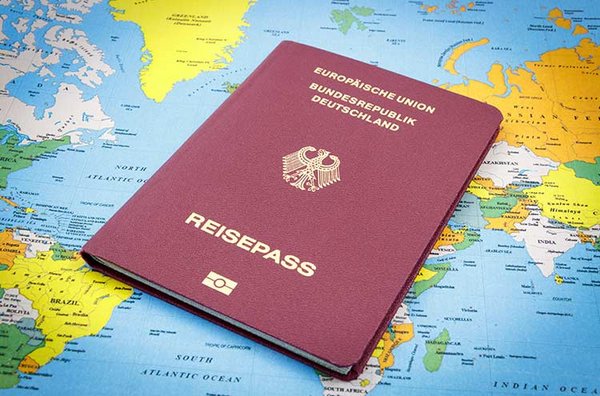
Your entry into Canada depends entirely on whether you have certain documents and personal details. Or, put simply, your ability to make a fresh start there without any hassle. First and foremost, both you and your container should be able to enter the country without a hitch; otherwise, it could prove costly and complicated. Your new life in Canada requires a number of important documents, receipts and certificates from your country of origin. For example, when applying for a job in Canada, visiting the doctor or buying a car in your new home country.
Make copies of all important documents whilst you’re still preparing for the move, and later distribute the copies between your removal container and your hand luggage.
Identity documents must be valid for a sufficient period. Otherwise, you’ll need to apply for and complete the renewal process well in advance. You should allow plenty of time for reapplying for documents such as a passport or an international driving licence. Public authorities sometimes take longer to process these. If you have a large number of receipts, certificates, documents and supporting evidence, it makes sense to have them translated into French or English. It is often important to be able to present a certified translation.- Passport (for each family member)
- National and international driving licence
- Birth certificate (for each family member)
- Marriage certificate, family register, possibly divorce decree, custody arrangements
- Evidence of existing and closed German bank accounts and bank details
- Proof of income and payslips for the last few months
- All educational documents, such as: school reports, school-leaving certificates, vocational training certificates and university degrees (original documents and English translations)
- Evidence of your most recent health insurance in Germany
- Evidence of a Canadian job offer or an employment contract (if available)
- International vaccination certificates (for each family member)
- Medical records (in English) and the European Emergency Identity Card (ENA)
-
Looking for accommodation in Canada

Canada is an attractive destination for immigrants, offering many advantages. Unfortunately, affordable housing isn’t necessarily one of them. At least not in most major cities and conurbations in the south-east, where rents are exorbitant. However, in every survey carried out, Canadian cities rank amongst the world’s best in terms of quality of life. Rents and property prices are significantly cheaper in rural areas, and Canada has plenty of these.
You can
search for property in Canada online, for example on platforms such as ‘rentseeker.ca’, ‘rentfaster.ca’ or ‘kijiji.ca’“. However, it is not advisable to rent or even buy a property from afar. It is better to start looking for a suitable property after you have emigrated, or to combine your search with a preliminary visit to Canada. Finding an area or neighbourhood that suits you is, of course, very important. Alternatively, you can hire a Canadian estate agent to find a home for you locally. You can also book a so-called ‘home inspector’ to carry out a property inspection in Canada. They will inspect the house, examining, for example, the roof, gutters and downpipes, the rendering, the windows and doors, etc. They will then report back to you on the condition of your chosen property.
In Canada, tenancy law and tenant protection legislation are not standardised. Instead, the regulations vary from province to province. As a rule, the deposit is not as high as in Germany and ranges from half a month’s rent up to a maximum of two months’ rent. As an immigrant, unlike Canadians, you do not yet have a ‘credit history’ which a landlord can use to assess a tenant’s trustworthiness and creditworthiness. However, proof of assets, a current employment contract or a guarantor can help in this regard.
Generally speaking, you should only buy a property in Canada if you have permanent resident status. This provides the guarantee that you will be able to remain in the country securely. However, buying a property in Canada may prove difficult in future anyway. The Canadian government intends to remove this option entirely for non-Canadians.Should your property search in Canada take longer than planned, or only be possible once you have moved to Canada, DMS will be happy to store your removal goods. Would you like to save yourself the hassle of searching for a home in Canada altogether? Simply let us know your requirements and criteria – DMS’s experienced relocation service will handle the property search for you on the ground, in collaboration with reliable Canadian partners.
-
Canadian driving licence
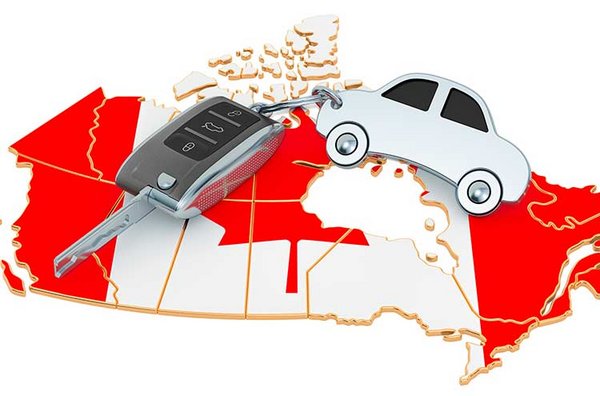
Thanks to an agreement, German nationals can drive in Canada for up to three months using their German driving licence (in card format). It is nevertheless advisable to obtain an international driving permit as well. This may be required, for example, when hiring a car or during a police stop.
Once you have settled in Canada, it naturally makes sense to obtain a Canadian driving licence as soon as possible. To do this, you must exchange your German driving licence for a Canadian one. In Canada, driving licences are issued by the individual provinces, some of which have different regulations. Make sure you find out in advance about the specific regulations in your future home province. -
Health and pension insurance in Canada

Medicare
Canada is divided into ten provinces and three territories. As the provinces enjoy a high degree of autonomy and independence, healthcare is also managed with a certain degree of autonomy there. Whilst the public healthcare system, Medicare, is standardised across the whole of Canada, its benefits and funding do, however, vary from province to province.
As an expat in Canada, the Canadian healthcare system is likely to be out of reach
for you initially, as Canadian citizenship or permanent resident status is generally required to be eligible for Medicare. Nevertheless, you should enquire with your Canadian province to see whether you might be able to access Medicare benefits even without this status.
It is generally
advisable to take out (additional) private health insurance, which many Canadians also have to supplement Medicare. This is because Medicare does not cover certain services anyway, such as emergency services, dental care or the cost of medication. It is also possible to obtain health insurance through a Canadian employer; however, this would then cease at the same time as your employment.
Social Security and Pension Insurance in Canada
Canada does not offer social security benefits to the same extent as the German social security system. Anyone wishing to work in Canada first needs a Social Insurance Number. You should therefore apply for a Social Insurance Number (SIN) as soon as possible after moving to Canada. It not only functions like the German social security number but also serves as a tax reference number. This makes the SIN extremely important in many areas, particularly when taking up a job in Canada.
Pensions
The simplest way to receive pension benefits is probably if you have already accrued the entitlement in your home country. Anyone who has worked in Germany and paid into the pension scheme will continue to receive their German pension in Canada. Naturally, this is only once you have reached the relevant retirement age.
The Canadian Old Age Security (OAS) pension is generally payable to anyone aged 65 or over who has worked in Canada for at least 10 years since the age of 18. To apply for Old Age Security, you must hold permanent resident status. Unlike in other countries, the amount of Canadian pension payments does not depend on the length of one’s working life. Instead, it depends on income and the total length of time an applicant has lived in Canada. To secure a reasonably decent Canadian pension, it is advisable to take out additional private pension insurance. -
Job hunting in Canada

Canada clearly favours the immigration of skilled workers, entrepreneurs and investors. If you are in a profession that is in demand in Canada, your chances of achieving a high score under the Canadian points-based system – and thus of emigrating to Canada – are far better. Under the heading ‘Visa – Your Ticket to a Life in Canada’, we explain the ‘Work Permit’ and the requirements for the ‘eTA’. A suitable visa with a work permit is, in principle, a prerequisite for a residence permit in Canada and for taking up a job there.
Language skills are, of course,
no less important. Without a solid command of English or French, finding a job in Canada will remain a pipe dream.
You can start looking for a job either immediately after moving to Canada or even whilst still in your home country. This depends on whether you wish to gain a foothold in North America with a job after moving, or whether you intend to use a Canadian employer as the basis for your emigration. In both cases, an online search is helpful. This can be done via Canadian websites, including those of platforms such as ‘indeed.ca’ or ‘Monster.ca’, which are also available in Germany. Please note that these sites use the Canadian domain extension ‘.ca’.
In addition, the Canadian government itself operates a comprehensive online portal for job vacancies in Canada via the website ‘jobbank.gc.ca’.
These job portals are particularly useful for finding roles in the provinces in the south-east of the country, where a good 80 per cent of Canadians live. This is especially true in the metropolitan areas and largest cities such as Toronto, Vancouver and Montreal. Rural regions are significantly under-represented on these job platforms.
Once
you have arrived in Canada, you can also search via regional job boards, in daily newspapers (including online editions) and through local recruitment agencies. A network on LinkedIn can also be quite useful in Canada.
Once you have found a good job offer, you can apply to the Canadian company. The application should, of course, be free of errors and include a CV alongside the application letter. Ideally, this should include employment references; certificates, on the other hand, are less important in Canada. Please note – just as in the US, your CV must not include a photograph or any references to gender, nationality, religion, marital status or parents.
If possible, try to address your application directly to the relevant contact person within the company. Otherwise, it may take an unnecessary detour or get stuck in the wrong place. A preliminary phone call with the potential employer can help you identify the correct recipient. You may also find out useful information about the company this way, giving you valuable background knowledge. Even if your language skills aren’t absolutely perfect, the right demeanour – friendly, confident and attentive – can make up for a great deal.
Good luck! -
Opening a bank account in Canada

Without a Canadian bank account, you’ll run into difficulties quite soon after moving to Canada. Whether you want to pay rent for accommodation, receive a salary or buy a car in Canada, none of this will be possible without a local bank account.
It’s not straightforward to open an account whilst still in Germany, but you’ll need to visit your bank’s Canadian branch anyway. Opening a Canadian account there is a quick process; it usually takes no longer than 15 minutes. As for which bank to choose, it’s a good idea to ask friends or acquaintances in Canada for advice. After all, positive experiences with a Canadian bank are the best recommendation.
However, there are other factors to consider. Are you living in a major Canadian city to start with, but planning to move to the countryside later on? Then you should choose one of the major Canadian banks, which have branches and cash machines throughout the country. With other banks, you’ll likely incur fees when using cash machines.
Good
options would include Scotiabank, TD Canada Trust, the Bank of Montreal or Canada’s largest bank, the Royal Bank of Canada. They all offer a very comprehensive range of services and, in some cases, special offers for immigrants.
To open an account at a Canadian bank branch, you will need two forms of identification. One of these can be a German identity card or a driving licence. The other document must be a Canadian identity certificate or your SIN. Some banks require at least one Canadian identity document. Some even require a guarantor, such as one of their existing customers. This is where the friend or acquaintance who recommended the bank might come in again. You’ll also need a local residential address. This might sound like a lot of hassle. But if you have the right documents to hand, opening an account at a Canadian bank branch is actually very quick and straightforward. -
Personal experiences of people who have emigrated to Canada

Deutsche Möbelspedition is your expert with many years’ experience in relocations to Canada. Whether you’re emigrating to Canada, moving as an expat or relocating to North America for a limited period. Thanks to our expertise in relocations to Canada, we ensure that your overseas move goes smoothly and stress-free.
You’ll benefit directly from our wealth of experience when emigrating and moving to Canada. DMS will support you throughout your move to North America to the extent you require. If you wish, we can take care of everything right up to the handover of the keys to a fully furnished Canadian home. But you’ll no doubt also find practical advice on overseas relocation and everyday life after settling in helpful. That’s why we’ve compiled some useful tips, personal insights and opinions from people who have emigrated to Canada for you.
Finances
One thing applies to every emigration: you shouldn’t take the big step without sufficient financial reserves – all emigrants agree on this. It’s not just essential everyday purchases such as a car, fridge or other household items that cost money. Sometimes things simply don’t go to plan. That affordable temporary accommodation might fall through, your partner’s job search might not go as planned, or – quite simply – a dental crown might come loose. Canada has a fairly high cost of living, so you shouldn’t embark on the adventure of emigrating to Canada without a reasonable sum set aside. Expatriates also report costly bureaucratic processes in Canada. Certificates, professional examinations, or the issuing of documents and translations can quickly add up.
It’s also worth noting that, as emigrants report, even when moving to another Canadian province, you’ll have to reapply for many things.
You should also
bear in mind the need for additional health and social insurance cover, which, of course, must be paid for.
Anyone from Germany who is used to paying with cash will need to adjust. Emigrants point out that in Canada, as in many other countries, cash is no longer commonly used. Instead, card payments are very widespread there.
Work
Neither a good job nor a flat is easy to find in Canada, and Canadians, like locals in any country, are generally given preference. German vocational training and work experience are often less highly regarded in Canada. This is why it is not uncommon for immigrants to have to start at a lower job level in order to secure employment. It is also not uncommon to have to sit additional exams or even undertake training courses to validate their professional qualifications.
Risks and opportunities
Emigrating to Canada – as successful Canadian immigrants repeatedly point out – is by no means easy. The early stages in particular, following emigration to Canada, require a great deal of perseverance and a certain amount of ‘tenacity’.
A word of warning is also issued against false promises made by individuals and companies that appear to offer overly tempting support to those emigrating to Canada. It is not possible, for example, to circumvent immigration regulations, nor can permanent residency be bought. Under no circumstances should you accept such offers.
However, once you have arrived, you will be living in one of the countries with the highest quality of life. Canadian cities consistently feature in every new survey of the world’s most liveable cities. With a population of around 38 million, this North American country is the second-largest and, at the same time, the least densely populated country on Earth. Canadians are overwhelmingly described as friendly and laid-back, whilst the Canadian way of life is seen as relaxed, open and tolerant. Canada is undoubtedly a country with a diverse civil society and, partly as a result, a rich cultural diversity.
Expatriates are also unanimous in their opinion of Canada’s natural environment. Canada is a country of breathtaking landscapes and seemingly endless expanses. For many people from all over the world, it is exactly the right place to call home and put down roots. -
Checklist of the most important points

Moving to Canada requires some preparation. Certain matters, such as looking for a job in Canada, planning your move and calculating the cost of a shipping container, should be tackled well in advance. Which visa you need for your move to Canada and what is required for the application are crucial questions that should be clarified at a very early stage. After all, your entire move depends on obtaining a Canadian residence and work permit. Once these very first steps have been sorted out, it’s time to move on to planning the move and the practical preparations for emigration. With our checklist, we aim to provide you with a guide for your move to Canada. This will enable you to assess the scope and timing of all the stages involved in the move.
Would you like to ensure your move to Canada is completely stress-free and runs smoothly? If so, we’d be delighted to offer you our comprehensive range of services for international relocation. Relocations to Canada have been part of our service portfolio for many years. We know exactly what matters when moving to Canada. So put your trust in DMS’s experienced removal experts and bespoke removal service. We’ll support you every step of the way, from your old home to your new one in Canada.
Allow 7–8 months’ lead time before the actual move- Check the options for permanent residence in Canada and apply for a visa; if necessary, look for a job with Canadian companies
- Arrange a personal appointment with DMS removal experts to jointly calculate the cost of the move, container size and timetable
- Start the necessary vaccinations for pets
- Book your flight to Canada (cheaper if booked well in advance)
- With lead time before the actual move (4–5 months)
- Cancel your subscriptions, contracts and memberships (e.g. electricity, water, rent, insurance, internet, clubs, ADAC, pay-TV, etc.)
- Undergo a medical check-up and obtain a police certificate for a Canadian eTA or visa
- Renew or, if necessary, apply for new identity documents (passport, driving licence and international driving permit)
- Have important documents translated (see: Which documents are required?)
- Find accommodation in Canada or commission DMS Relocation Service
Before the move (3–4 weeks)
- Deregister your address
- Deregister with the tax office and pension insurance scheme
- Apply for a mail forwarding service with the Post Office
- Make multiple copies of all relevant documents and divide them between the removal containers and your luggage
- Arrange for bulky waste collection and organise the disposal of remaining household goods
On arrival in Canada
- Register with the relevant authorities: place of residence, children at school, car, etc.
- Apply for a Canadian Social Insurance Number (SIN)
- Exchange your German driving licence for a Canadian one
- Open a Canadian bank account
- Take out private insurance as required, e.g. pension and health insurance
- Useful websites